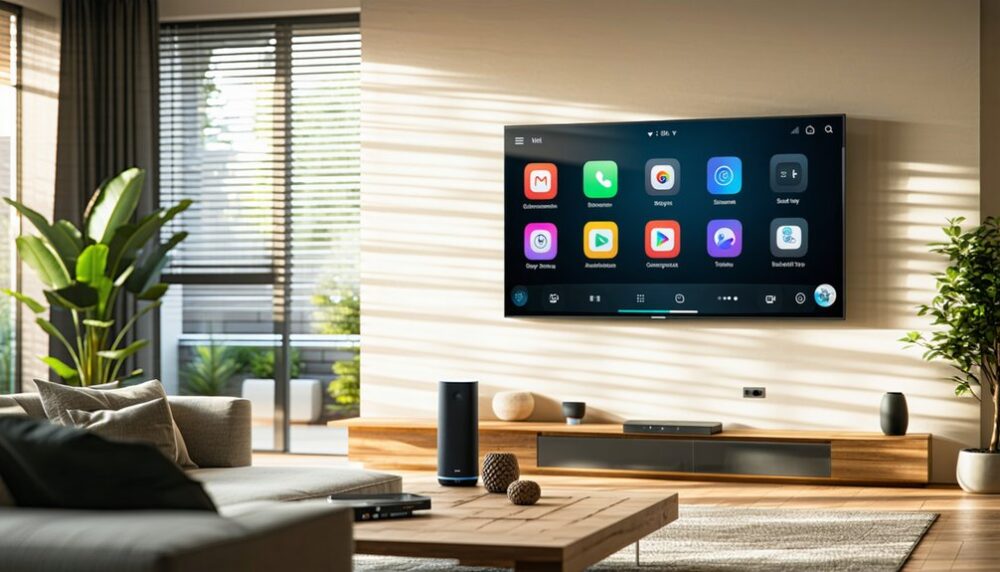
Smart homes are becoming increasingly automated and efficient through AI-driven personalization and predictive automation. They optimize energy management and enhance security features. Interoperability standards enable seamless device control. As technology advances, smart homes are progressing to improve residents’ quality of life. Further exploration reveals the full potential of smart home automation and its impact on daily life.
How Smart Homes Are Evolving
As the concept of smart homes continues to advance, it is becoming increasingly evident that these residences are turning into highly automated and efficient living spaces.
With advancements in AI-driven personalization, smart homes are learning habits and preferences, streamlining interactions, making it easier to control devices.
Additionally, ethical data handling is being prioritized to guarantee resident privacy.
The integration of IoT devices is expected to increase household penetration, making homes more connected and automated.
As smart homes evolve, they are becoming more intuitive and responsive, providing a sense of belonging and comfort.
This evolution is revolutionizing the way people live, making homes more efficient and sustainable.
The incorporation of AI technology is also leading to significant growth in security tech, with a reported 151% growth from 2019-2023, making homes safer and more secure.
The use of Matter standards is also becoming more prevalent, enhancing device communication and interoperability, which is a key factor in the development of smart homes.
What Is Predictive Automation In Smart Homes
How do smart homes anticipate and respond to their occupants’ needs before a manual command is even given? This is achieved through predictive automation, which employs adaptive learning and predictive scheduling to learn household routines.
The system shifts from reactive to proactive control, anticipating needs based on past behavior and sensor data.
By analyzing patterns and preferences, smart homes can pre-adjust temperature, turn on lights, and prepare devices before arrival or wake-up times.
This proactive approach enables a more seamless and efficient living experience, making residents feel like their home truly understands their needs.
The incorporation of AI technology has further enhanced the predictive capabilities of smart homes, allowing them to refine their algorithms for optimal performance over time.
With the integration of smart devices, homes can also reduce energy consumption by utilizing renewable sources to power their systems, leading to a more sustainable living environment.
The demand for smart home features is driving market growth, with 81 % of buyers preferring homes equipped with smart technology, including features that support surround sound systems.
Benefits Of Energy Optimization In Smart Homes
Smart homes are leveraging energy optimization to release significant benefits, revolutionizing the way residents live and interact with their living spaces.
Energy optimization yields substantial energy savings, reducing waste and lowering utility bills. This, in turn, contributes to carbon reduction, minimizing the home’s environmental footprint.
By optimizing energy usage, smart homes can cut unnecessary energy consumption, leading to a more sustainable and efficient living environment.
Through energy savings and carbon reduction, residents can enjoy a more comfortable and controlled living space while promoting a greener future. This collaboration enhances overall home efficiency.
The integration of renewable energy sources into smart homes has become a key factor in achieving energy optimization, allowing residents to reduce their reliance on non-renewable energy sources.
The use of devices with smart technology can further enhance energy optimization in smart homes, allowing for more efficient management of energy consumption and contributing to a reduction in energy waste.
Implementing HVAC systems with smart thermostats enables smart homes to regulate temperatures more efficiently, providing a significant reduction in energy consumption and promoting a more sustainable living environment.
How Interoperability Improves Smart Home Experience
What enables devices from different brands to work together seamlessly in a smart home ecosystem? Interoperability is the key, allowing for brand device sync through unified protocols.
This enables devices like lights, thermostats, and security systems to connect and function as one ecosystem.
With unified protocols, users experience a streamlined and simplified smart home experience.
Interoperability reduces compatibility issues, making it easier to add new devices and expand the smart home network.
This creates a more efficient and automated home, where devices work together in harmony, enhancing the overall smart home experience.
The shift to a service-centric approach is crucial for smart home automation, as it emphasizes contextual data use over static product features, enabling a more integrated and efficient smart home ecosystem.
The adoption of Matter certification is becoming increasingly important, as it ensures devices can work together seamlessly, and over 37% of U.S. internet households consider it a key factor when shopping for smart home products.
Standardization through standards enables manufacturers to focus on innovation and user experience, rather than compatibility, leading to a wider range of devices and services for consumers.
What Is Security Automation In Smart Homes
Interoperability’s role in creating a seamless smart home experience has paved the way for advancements in various aspects of home automation, including security.
Security automation in smart homes refers to the automatic control of security devices through rules and schedules. This is achieved through a hub, network, and devices working together, with encrypted firmware and adherence to privacy protocol standards.
Automated actions include arming alarms and locking doors, triggered by parameters such as time, occupancy, and motion. Real-time alerts and automated responses to possible threats are also sent, ensuring a secure and efficient smart home experience. The incorporation of Zigbee protocols enables the creation of a mesh network, allowing for reliable communication between devices and enhancing the overall security automation system. The use of Central Hub technology has also improved the efficiency of security automation, allowing for easier management and control of various security devices.
Many smart home security systems, such as those from ADT, offer advanced security automation features that can be controlled remotely, making it easier for homeowners to manage their security settings.
Understanding Presence Sensing And Adaptive Environments
As presence sensing technologies continue to evolve, they are playing an increasingly essential role in creating adaptive environments that enhance the overall smart home experience.
Sensor fusion combines different technologies, such as PIR and mmWave sensors, to improve detection accuracy.
Adaptive zoning enables smart homes to respond differently based on occupancy patterns. This approach reduces unnecessary device activity, making homes more efficient.
How Wellness And Quality-Of-Life Automation Work
How effectively smart homes integrate wellness and quality-of-life automation can markedly impact the daily lives of their occupants.
Smart homes promote mental wellness through lifestyle integration, adjusting lighting, climate, and audio to support daily routines.
This automation enhances mental resilience and provides caregiver support, improving overall well-being.
By streamlining environmental comfort, smart homes reduce stress and create a sense of security, ultimately cultivating a healthier and more comfortable living environment.
This integration of wellness and quality-of-life automation enables occupants to thrive, promoting a better quality of life for all, including older adults and their caregivers.
What Makes A Smart Home Efficient And Automated
Smart home efficiency and automation are built on several key components that work together to create a seamless and integrated living environment. A centralized control system, scheduling and scene automation, and occupancy awareness are essential elements.
Regular firmware updates and minimal vocal latency guarantee devices respond quickly to commands.
This integrated approach enables smart homes to optimize energy management, reducing waste and lowering consumption.
Top Features Of Automated Smart Homes
The integration of various technologies has given rise to a plethora of innovative features in automated smart homes, which collectively enhance the living experience.
Top features include voice control, allowing for hands-free management of lighting, temperature, and entertainment.
Automated lighting, such as voiceive lighting, and occupancy sensing also play a pivotal role, adjusting to occupants’ needs and reducing energy waste.
These features work together to create a seamless and efficient living environment, making automated smart homes a desirable choice for those seeking convenience, comfort, and sustainability.
They enhance the overall quality of life for residents.
How To Choose The Right Smart Home Devices
Selecting the ideal smart home devices requires careful consideration of various factors, as homeowners seek to enhance their living experience without introducing unnecessary complexity.
They must identify primary goals, such as security or energy savings, and prioritize devices that match daily routines.
Effective budgeting is essential, as it helps determine the best value for money.
By considering ecosystem compatibility, internet capacity, and ease of use, homeowners can make informed decisions.
Data analytics can also inform budgeting decisions, ensuring a seamless and efficient smart home experience that meets their needs and stays within their budget.
The Role Of Ai In Smart Home Automation
Homeowners who have carefully chosen their smart home devices can now employ the power of artificial intelligence to take their living experience to the next level. AI-enabled smart homes respond to room activity, occupancy, and energy usage, analyzing household habits and adjusting automation over time.
This raises important considerations around AI ethics and data privacy, as systems collect and process vast amounts of personal data. By prioritizing transparency and security, homeowners can leverage the benefits of AI-driven automation while maintaining control over their personal information. This balance is key to creating a seamless and efficient smart home experience.
Smart Home Automation For Energy Savings
How effectively can smart home automation reduce energy consumption in residential settings, and what strategies are most impactful?
Smart home automation optimizes energy use by coordinating lighting, HVAC, and appliances. It enables demand response by adjusting energy consumption based on the grid’s supply. By automating energy management, homeowners can reduce waste and lower their energy bills.
Smart home systems can also provide real-time monitoring and energy reports, supporting ongoing optimization and sustainability goals.
Effective smart home automation strategies include HVAC optimization, lighting controls, and appliance management, all of which contribute to a more efficient and responsive grid.
How To Integrate Smart Home Devices Seamlessly
Effective energy management through smart home automation can substantially reduce waste and lower energy bills, but the benefits of a smart home extend far beyond energy efficiency.
To integrate devices seamlessly, consider a DIY mesh network for reliable connectivity.
Cloud orchestration simplifies the process by allowing users to control and monitor devices from a single platform.
By choosing compatible devices and a centralized hub, users can create a cohesive smart home ecosystem.
This streamlined approach enables effortless control and customization, making it easy to belong to a smart and efficient home environment.
Compatibility is key to a smooth integration process.
The Future Of Smart Home Automation And Efficiency
Several key trends are positioned to shape the future of smart home automation and efficiency, driven by advancements in artificial intelligence, the Internet of Things, and a growing focus on sustainability.
As homes become more automated, considerations around AI ethics and data sovereignty will be pivotal.
Residents will need control over their personal data, ensuring it is protected and used responsibly.
With smart homes generating vast amounts of data, prioritizing data sovereignty is essential for a secure and efficient living experience.
This will enable residents to trust and fully employ their automated homes.
Implementing Smart Home Automation For Beginners
As smart homes become increasingly automated and efficient, many individuals are now exploring ways to integrate these technologies into their own living spaces.
Implementing smart home automation can be a budget-friendly process with a budget start. Beginners can achieve quick-wins with DIY-setup of smart devices.
Starting with a clear goal and a small scope helps determine the most useful devices to begin with. A compatible ecosystem and foundational devices like smart speakers and lights are essential.
Frequently Asked Questions
Can Smart Homes Work Without Internet?
They can function without internet via offline connectivity and local control, enabling devices to operate independently, enhancing privacy and reliability.
Are Smart Homes More Expensive?
They are, due to higher up-front costs and installation fees, but long‑term maintenance and energy efficiency can offset expenses, making smart homes a worthwhile investment for many homeowners eventually.
Do Smart Homes Increase Property Value?
Yes, smart homes increase property value, influencing resale impact and energy insurance trends, as integrated technology enhances marketability and appeal, resulting in higher resale prices and potential insurance benefits.
Can Smart Homes Be Hacked?
Yes, smart homes can be hacked, posing significant privacy security risks, including data privacy breaches and network intrusion, compromising residents’ safety and trust.
Are Smart Homes Worth the Investment?
They believe smart homes are worth the investment, offering energy savings and strong ROI, with DIY integration options making them more accessible and desirable for many homeowners seeking convenience.
References
- https://nuwavega.com/blog/smart-home-automation-trends-2026
- https://www.repenic.com/blogs/knowledge/smart-home-trends-2026-ultimate-guide-to-systems-devices-and-setup
- https://www.thefarnsworthgroup.com/blog/smart-home-automation-trends
- https://www.youtube.com/watch?v=XsC_NnTBDb0
- https://www.knx.org/knx-en/newsroom/news/news/20251211-5-smart-home-trends-to-watch-in-2026/
- https://www.youtube.com/watch?v=abrW_UYgXno
- https://www.linkedin.com/pulse/europe-smart-home-automation-market-outlook-2026-2035-8pcbf
- https://spartanconcepts.ai/the-complete-guide-to-smart-home-automation-in-2026/
- https://www.forbes.com/sites/paullamkin/2026/01/01/how-to-supercharge-your-smart-home-in-2026/
- https://www.reddit.com/r/smarthome/comments/1pxjjms/what_trends_do_you_want_to_see_in_the_smart_home/