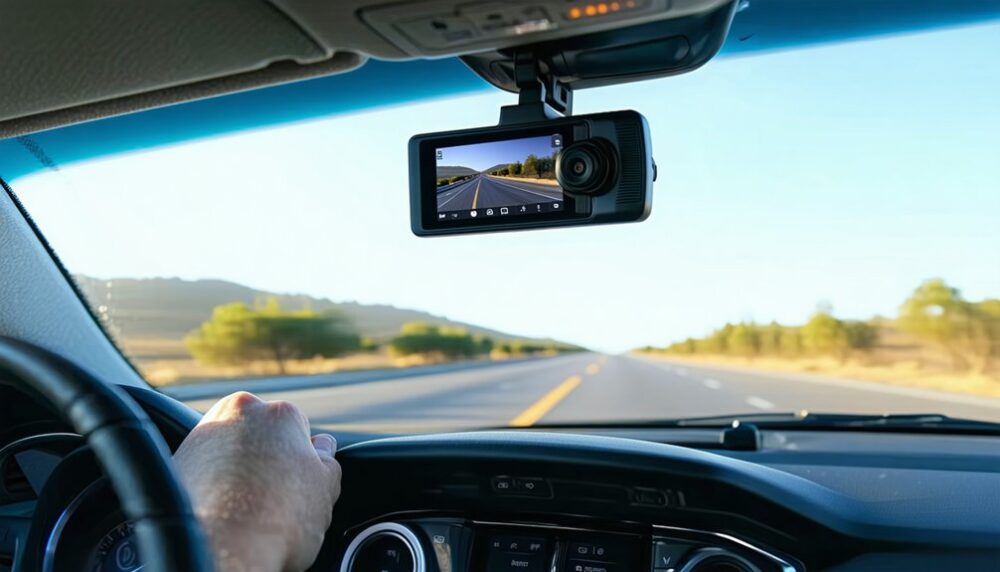
Smart dashcams markedly improve driver safety and security by leveraging AI and real-time monitoring. They detect risky behaviors, such as distracted driving, and provide instant feedback. This proactive approach reduces accidents and enhances overall driving experiences. By exploring the capabilities of smart dashcams, individuals can gain a deeper understanding of how these innovative devices are revolutionizing road safety, and uncover the benefits they can bring to drivers everywhere.
What Are Smart Dash Cams And How Do They Work
Several key features distinguish smart dash cams from their basic counterparts, setting them apart as advanced, AI-enabled vehicle cameras. They offer robust privacy integration, ensuring data privacy for users.
With cloud storage, footage is securely stored and easily accessible.
The user interface is designed to be intuitive, allowing for seamless navigation and control.
Smart dash cams provide a sense of belonging among drivers, offering a reliable and innovative solution for vehicle security and monitoring. They utilize real-time analysis to detect risky actions such as distracted driving, enabling immediate feedback and coaching to improve driver safety. Many smart dash cams also come with 4G LTE connectivity, allowing for independent and continuous online presence, and enabling features such as remote live view and cloud upload of critical clips.
The user interface is also enhanced with features like voice command and hand-gesture video save, making it easier for drivers to use the smart dash cam while on the road.
Smart dash cams are also powered by the vehicle’s electrical system, which allows for auto-start on ignition and continuous recording while the vehicle is in motion, providing a valuable tool for improving road safety and reducing insurance premiums.
Improving Driver Safety With Real-Time Monitoring
Real-time monitoring detects risky behaviors, including driver fatigue and lane departure detection, enabling immediate intervention.
AI-powered dash cams analyze driver behavior and road conditions, triggering alerts for unsafe actions.
This instant feedback supports faster correction of unsafe habits, reducing the risk of collisions.
By identifying early indicators of risk, smart dash cams provide collision prevention support, ultimately improving driver safety and security.
Real-time monitoring is a pivotal feature in enhancing driver safety.
The implementation of infrared technology in smart dash cams also enables low-light or night detection, further enhancing the effectiveness of real-time monitoring.
The use of detection systems can help reduce the number of accidents caused by driver fatigue, which is a major concern for many fleets.
Advanced ADAS technology is integrated into many smart dash cams, providing an additional layer of safety and security for drivers.
Reducing Risky Driving Behaviors By Up To 60
The presence of visible dash cams markedly curtails risky driving behaviors, with studies indicating a reduction of up to 60% in such actions when drivers are aware they are being recorded.
This significant decrease is attributed to heightened behavior engagement and altered risk perception. Drivers become more cautious, adhering to safety protocols and exhibiting better driving habits.
The awareness of being monitored cultivates a sense of accountability, leading to a substantial reduction in risky behaviors. The implementation of proactive safety measures, such as real-time alerts and instant in-cab warnings, can further enhance driver safety and security. By reducing distracted driving, fleet managers can also lower the overall rate of accidents and improve road safety.
How Smart Dash Cams Support Safer Driving Habits
Reducing risky driving behaviors is a significant step towards improving road safety, and smart dash cams play an essential role in this process by cultivating a culture of accountability among drivers.
They employ driver habit analytics to identify areas for improvement, such as distraction detection, and provide real-time alerts to correct unsafe behaviors.
By leveraging these features, smart dash cams support the development of safer driving habits, promoting a sense of community and shared responsibility among drivers.
This, in turn, contributes to a safer and more secure driving environment for all road users, fostering a culture of mutual respect and cooperation.
The use of smart dash cams can also help reduce insurance premiums by providing video evidence in the event of an accident, which can lead to lower costs for fleet owners and a reduction in fraudulent claims.
The implementation of real-time alerts and notifications enables drivers to receive immediate feedback on their driving habits, allowing them to make necessary adjustments to promote safer driving practices.
The Role Of Ai In Enhancing Driver Safety Features
Artificial intelligence is revolutionizing the field of driver safety, elevating traditional dash cams to sophisticated systems that proactively prevent accidents.
AI-powered hazard detection and driver monitoring enhance safety features, while predictive risk analysis enables proactive prevention.
As AI collects and analyzes data, concerns about AI ethics and data privacy arise. Developers must prioritize these issues to guarantee trustworthy systems.
By integrating AI into dashcams, drivers can benefit from advanced safety features, promoting a sense of community and shared responsibility on the road.
This technology aims to complement human driving, adding automated monitoring and early warning signals to reduce accidents.
Understanding The Benefits Of Real-Time Feedback
Smart dashcams are elevating road safety by providing real-time feedback, a significant advancement beyond mere accident recording.
This real-time feedback enables comparative detection of potential collisions and enhances driver engagement.
Alerts are triggered when safety thresholds are exceeded, warning drivers of lane departures, collision threats, and distraction events.
Immediate coaching through audible alerts addresses risky behaviors, creating a closed loop of detection, warning, and correction.
This instant feedback increases situational awareness, supporting safer decision-making and habit formation, ultimately reducing accident risk and promoting a culture of safety through proactive driver engagement and comparative detection.
The automation of data analysis through AI technology cuts operator workload and incident-review costs, allowing for more efficient management of fleet safety.
The integration of smart dashcams with existing platforms, such as Geotab, has been shown to reduce phone use while driving by 95%, a significant improvement in road safety.
How Dash Cams Provide Accident Evidence And Claims Support
Dash cams are increasingly being recognized for their role in providing useful evidence in the event of an accident, thereby supporting insurance claims and facilitating a more efficient resolution process.
They help determine fault and provide objective video evidence, which can clarify disputes and reduce privacy liability concerns.
This evidence is priceless in insurance claim processing, allowing for a fair settlement and reducing the risk of incorrect liability assignment. The use of electronic evidence from dash cams can significantly strengthen a claim by providing a clear and unbiased account of the accident. The authenticity of dash cam footage is crucial, and verifying its relevance is essential to ensure it can be used as admissible evidence in court.
The installation and maintenance of dash cams, including the use of GPS data, can also aid in the investigation of accidents and provide valuable information for insurance claims.
Reducing Fraud And Liability With Video Evidence
Numerous instances of insurance fraud can be prevented with the use of video evidence from dash cams, which serve as impartial eyewitnesses to road events. This facilitates fraud detection by capturing real-time events and revealing unnatural driving behavior. The use of dash cams can lead to a reduction in insurance premiums for drivers who install them, as it promotes a safer driving environment by providing continuous visual documentation of vehicle surroundings. Dash cams also enable liability reduction by providing direct visual evidence of what occurred before, during, and after a collision. Clear video evidence makes fraudulent claims harder to sustain, replacing conflicting narratives with observable facts. The use of dash cams can also lead to insurance discounts for drivers who install them in their vehicles, as it promotes a safer driving environment. According to recent studies, the presence of dash cams has resulted in a significant reduction in fraudulent insurance claims, making them a valuable tool for drivers and insurance companies alike.
Protecting Against Parking, Theft, And Security Threats
Many vehicles are most vulnerable when left unattended, and it is during these periods that they are often exposed to various security threats, including theft, vandalism, and hit-and-run incidents.
Smart dashcams offer protection against parking theft and vandalism deterrence through features like motion detection and impact sensing.
They can record incidents even after ignition-off, providing longer coverage and preserving key evidence.
Night-vision capable cameras and warning lights also reinforce the impression of active surveillance, discouraging potential thieves.
The use of supercapacitor power in some smart dashcams allows for reliable and extreme temperature operation, further enhancing their ability to provide 24/7 protection.
The K-900R Dashcam, with its radar system, provides an additional layer of security by detecting human presence or movement several meters away, initiating recording before physical contact occurs.
Enhancing Fleet Accountability And Operational Value
Fleets are leveraging smart dashcams to raise their accountability and operational value, as these devices provide a wealth of objective evidence and actionable understanding. This enhances fleet compliance by promoting a culture of safety and responsibility.
Smart dashcams facilitate data integration, allowing managers to review footage remotely and make informed decisions. By combining safety gains with lower claims and operating costs, fleets can achieve a stronger return on investment.
Effective data integration also supports better operational planning, improving overall fleet performance and reducing expenses. This approach strengthens fleet accountability and operational value.
Using Smart Dash Cams For Proactive Security Measures
Implementing proactive security measures is essential for maximizing the benefits of smart dash cams, and device hardening plays a significant role in this process.
Device hardening includes ensuring strong, unique Wi‑Fi passwords and applying firmware updates to close security flaws. This helps maintain privacy compliance and prevents unauthorized access to footage and device settings.
Regular firmware updates are vital for addressing vulnerabilities and protecting user data. By prioritizing device hardening and maintaining privacy compliance, users can effectively employ smart dash cams for proactive security measures, ultimately enhancing their overall safety and security.
Regular updates guarantee continued protection.
Streamlining Operations With Combined Video And Telematics
The integration of video and telematics data has revolutionized the way organizations streamline their operations, particularly in the sphere of driver safety and security.
This combination enables fleet analytics, providing a thorough view of vehicle activity and driver behavior.
By leveraging video and telematics data, organizations can implement effective driver scoring, identifying areas for improvement and coaching opportunities.
This integrated approach enhances operational efficiency, allowing for data-driven decisions and proactive measures to improve driver safety and security.
As a result, organizations can optimize their operations, reduce risks, and improve overall performance.
Fleet analytics and driver scoring are key benefits.
How Smart Dash Cams Improve Efficiency And Claims Handling
Smart dash cams are revolutionizing the way organizations handle claims, streamlining the process and improving efficiency. They provide high-definition video evidence, reducing disputes and investigation time.
Claims efficiency is enhanced, with claims settling about 35% faster when supported by dash cam footage. This leads to claims reduction and efficiency in investigations, making the process more streamlined.
With clear video records, insurers can determine fault faster, reducing false claims and liability. Overall, smart dash cams promote claims efficiency, facilitating faster and more accurate claims handling, which benefits both drivers and organizations. This improves the overall claims process.
The Importance Of Choosing The Right Smart Dash Cam
Choosing the right smart dash cam is essential, as it directly impacts the effectiveness of the device in improving driver safety and security.
When selecting a smart dash cam, consider factors such as data selection and data privacy to guarantee compliance with regulations. This is particularly important for parking enforcement and insurance discounts.
A smart dash cam with high-resolution recording and clear footage can provide useful evidence in case of incidents.
Implementing Smart Dash Cams For A Safer Driving Experience
How effectively can drivers enhance their safety on the road by leveraging the advanced features of smart dash cams?
Implementing smart dash cams promotes driver autonomy and motivation by providing visibility into driving habits.
This can address privacy concerns by ensuring that privacy data is protected.
By utilizing these devices, drivers can experience increased safety and security, mitigating potential risks on the road.
Smart dash cams offer a sense of belonging among drivers, nurturing a community that prioritizes safe driving practices.
Frequently Asked Questions
Are Smart Dash Cams Compatible With All Vehicles?
They are not universally compatible, with vehicle compatibility varying based on universal mounting and power requirements, limiting fit across all vehicles.
Can Dash Cam Footage Be Used in Court?
Yes, dash cam footage can be used as court evidence, but its admissibility may raise privacy concerns and depends on jurisdiction, relevance, and authentication requirements.
Do Smart Dash Cams Require Subscription Fees?
They typically do not, as most smart dash cams operate without subscription costs, prioritizing data privacy and local storage, although some models may require paid plans for enhanced features.
Are Smart Dash Cams Easy to Install?
They find smart dash cams easy to install, thanks to thorough installation guides and intuitive user interfaces that simplify the process for a seamless experience.
Can Dash Cams Be Used for Personal Vehicles?
Yes, dash cams are used for personal vehicles, enhancing personal protection, insurance, and accident analytics with vehicle monitoring, while addressing privacy concerns and data storage responsibilities.
References
- https://www.ajg.com/ca/news-and-insights/5-ways-dash-cameras-can-enhance-safety-and-reduce-liability/
- https://www.geotab.com/uk/resources/ebook/drivers-love-dashcams/
- https://screenrant.com/can-dash-cams-save-lives/
- https://eld.kellerencompass.com/resources/blog/2019-blogs/3-ways-dash-cam-technology-promotes-safety
- https://gomotive.com/blog/smart-dashcam-guide/
- https://www.acg.aaa.com/connect/blogs/5c/auto/dash-cams-and-vehicle-safety
- https://www.linkedin.com/pulse/smart-dash-cameras-real-world-5-uses-youll-actually-jq4kf
- https://www.merchantsgroup.com/blog/how-dashcams-encourage-and-prioritize-driver-safety/
- https://dashcamlondon.co.uk/blog/how-dash-cams-improve-road-safety-and-protect-drivers
- https://www.nationwide.com/business/agribusiness/safety-risk-management/resource-library/articles/benefits-of-dash-cameras