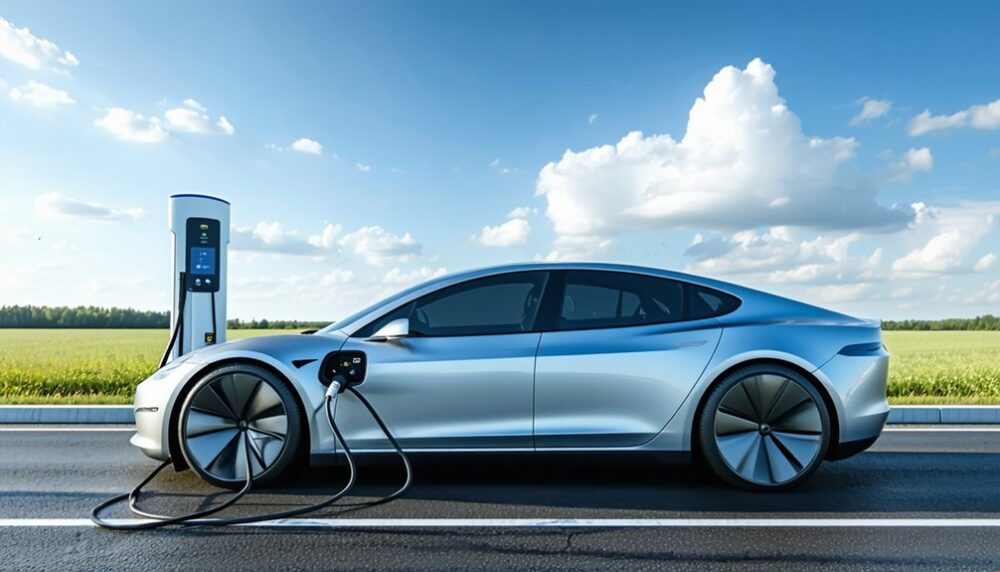
Fast-charging networks are expanding road trip options with over 61,269 chargers available. High-power chargers enable quicker recharging, reducing travel time. Strategically placed along major highways, chargers are now typically spaced within 100 miles apart. This growth in infrastructure supports longer distances and reduced charging times, making electric vehicle travel more accessible. As the network continues to grow, it will be interesting to examine the further implications for road trip enthusiasts.
How Fast-Charging Networks Expand Road Trip Options
The expansion of fast‑charging networks is revolutionizing the road trip experience for electric vehicle (EV) owners, making long‑distance travel increasingly practical.
Strategic charger placement along major highways has reduced “charging deserts” and increased route continuity.
This growth in fast‑charging infrastructure considers seasonal demand, ensuring that EV owners can travel with confidence.
With fast chargers now available at least every 100 miles, road trip planning has become more flexible and convenient.
The total number of fast chargers has increased significantly, with over 61,269 chargers available in 2025, making it easier for EV owners to plan their trips.
As a result, EV owners can enjoy a more seamless and enjoyable road trip experience, feeling connected to a growing community of like‑minded travelers. The installation of high‑power chargers has further enhanced the road trip experience, allowing for quicker recharging and increased travel efficiency.
The federal government has allocated funding to support the expansion of fast-charging networks, which is expected to further accelerate the growth of EV adoption and road trip travel.
What Are Fast-Charging Stations And How Do They Work?
Fast-charging stations have become a vital component of the electric vehicle ecosystem, enabling drivers to recharge their batteries quickly and efficiently.
They work by converting AC grid power into DC power, which is then sent directly to the battery. This process considers the vehicle’s battery chemistry to guarantee safe and efficient charging.
Grid integration is also key, as fast-charging stations manage their power output to balance with the grid’s demand. The development of fast-charging networks relies on Level 3 technology to facilitate long-distance travel and reduce charging times. The charging speed is limited by the OBC size, which affects how quickly the vehicle’s battery can be recharged.
Mapping Major Highway Corridors For Ev Travel
How extensively are major highway corridors being mapped to support electric vehicle travel across the United States?
Major highways are being designated as alternative fuel corridors, covering nearly 130 routes across 44 states.
The corridor program aims to support inter-regional travel with charger standards, facilitating long-distance EV travel.
Highway funding is essential for the buildout of these corridors, ensuring public access to charging stations.
With corridors like I-95 and I-91 designated, EV travel is becoming more feasible, reducing range anxiety and making road trips more accessible, thanks to coordinated highway funding and standardized charger standards.
The Department of Transportation’s efforts to create a network of charging stations have been successful, with nearly 60,000 miles of roads classified as Corridor Ready, which is a significant step towards expanding the country’s fast-charging network.
The presence of over 300 DC Fast Chargers along these corridors has significantly contributed to the growth of the EV travel network, making it easier for people to plan their trips without worrying about running out of charge.
The national alternative fuel corridor designation has played a crucial role in this development, with the network spanning nearly 85,000 miles across 35 states, and this extensive coverage is expected to further boost the adoption of electric vehicles.
The presence of these corridors has also led to the installation of new signage to alert drivers to alternative fuel locations, making it easier for them to find charging stations and plan their routes accordingly.
Understanding Charging Density And Trip Planning
As electric vehicle travel becomes increasingly viable, understanding the intricacies of charging density and trip planning emerges as a vital factor in determining the success of a road trip.
Charging density refers to the number of fast chargers in a practical driving area, affecting route choices and resilience.
Higher-density corridors improve route resilience, allowing shorter detours between chargers.
A charger buffer and strategic charger spacing are essential, enabling flexibility and minimizing dependence on a single station.
Effective trip planning considers these factors to guarantee a seamless journey. By utilizing tools like A Better Route Planner, drivers can optimize their route and take advantage of fast-charging networks to minimize downtime and reduce range anxiety.
With the growing number of DC fast chargers, road trippers can now enjoy more frequent and convenient charging stops, making electric vehicle travel more accessible and convenient for all.
To maximize range and efficiency, it is crucial to maintain a steady speed, as this reduces aerodynamic drag and allows for more efficient energy consumption, ultimately leading to a more successful road trip.
How To Plan Charging Stops Without Range Anxiety
Effective trip planning is essential for electric vehicle travelers, and a key aspect of this process involves strategically planning charging stops to minimize range anxiety.
To achieve route efficiency, travelers can use EV-specific planners to build a draft route and estimate segment-by-segment charging needs.
By planning stops with a conservative minimum arrival buffer, travelers can adjust their route to avoid range anxiety.
This approach allows for a more efficient and enjoyable trip, reducing the stress associated with running low on charge. Considering the need for efficient charging, using rapid charging hubs with multiple stalls can help reduce queue risk and make the trip more efficient.
To further enhance the trip experience, travelers should also aim to charge when their battery reaches around twenty percent state of charge to maintain a safe emergency cushion, allowing them to respond to any unexpected changes in their route or charging plans. Additionally, drivers can optimize their charging sessions by targeting the fast middle of the charge curve, which is typically between 10-60 percent state of charge, to minimize overall charging time.
The Importance Of Backup Fast Chargers On Long Legs
Strategic planning of charging stops is essential for minimizing range anxiety, and electric vehicle travelers have come to realize that having backup fast chargers on long legs is a key component of this process.
Backup fast chargers reduce trip risk by providing a charger redundancy option.
Having a backup charger within 15-30 miles of a critical stop guarantees a safe and timely trip.
This charger redundancy is vital for preserving the planned schedule and avoiding slow or expensive detours, ultimately supporting the fastest overall travel time.
Effective route planning incorporates charger redundancy for a seamless experience. With the help of PlugShare, travelers can access a vast network of charging stations, making it easier to find reliable backup options and plan their trips accordingly.
Redundancy And Backup Options For Ev Road Trips
How can electric vehicle travelers guarantee a seamless road trip experience, particularly when relying on fast-charging networks?
They can ensure network safety by planning primary and backup chargers, with the latter within 10-30 miles of the main stop. This approach serves as a form of charger insurance, mitigating the risk of a dead-end stop.
By using route planners to map redundant options, travelers can separate each stop into primary, backup, and emergency options, preserving flexibility and reducing uncertainty.
This proactive strategy enhances overall network safety and provides peace of mind for electric vehicle travelers.
Combining Charging With Meals Or Rest Stops
Electric vehicle travelers often find that combining charging with meals or rest stops is a practical approach to road tripping. This strategy, known as meal sync, allows drivers to charge their vehicles while taking a break to eat.
Rest‑stop charging is another approach, where drivers combine mandatory breaks with energy replenishment. By planning charging sessions around meals or rest stops, drivers can reduce downtime and make the most of their trip.
This approach is efficient, as charging sessions can be kept brief, typically lasting 20-30 minutes, making it an ideal way to recharge on the go.
Ev-Friendly Hotels And Overnight Charging Solutions
As travelers increasingly rely on electric vehicles for road trips, the availability of convenient and reliable charging solutions during overnight stays has become a vital factor in planning their itineraries.
EV hotel amenities, such as Level 2 AC charging, are a key consideration.
Charging reservation policies also play a crucial role, with some hotels offering free or paid charging options.
Transparent pricing and clearly labeled access rules are essential for a seamless experience.
Using Planning Tools For Efficient Ev Road Trips
Travelers relying on electric vehicles for road trips can markedly enhance their experience by leveraging specialized planning tools.
These tools enable route optimization, considering factors like budget battery and charger etiquette.
By inputting their vehicle’s specifics, users can receive personalized trip budgeting and recommendations for efficient charging stops.
Effective planning tools streamline the road trip process, allowing travelers to focus on their expedition rather than worrying about charging logistics.
The Role Of Level 2 Charging In Sparse Regions
Many rural areas rely on Level 2 charging to fill the gaps in their infrastructure, providing a vital service for drivers who need to recharge their vehicles during overnight stays or extended stops.
Level 2 charging supports rural dwell-time, enabling drivers to charge their vehicles while they rest or engage in activities.
This Destination power-share approach turns limited-stop locations into practical refueling points, making road trips more accessible.
Overcoming Remaining Limitations In Ev Travel
Overcoming the remaining limitations in EV travel entails addressing a complex array of challenges, including infrastructure constraints, reliability concerns, and geographic disparities.
Grid capacity is a significant concern, as high-power DC fast charging requires substantial electrical upgrades.
Rural gaps also persist, with many areas lacking fast chargers, resulting in slower charging speeds and less predictable trip times.
To overcome these limitations, it is essential to prioritize infrastructure development, focusing on areas with limited grid capacity and rural gaps, to create a more thorough and reliable fast-charging network.
This will help guarantee a seamless EV travel experience.
How Ev Road Trips Have Become More Accessible
As the density of fast-charging networks has increased, electric vehicle road trips have become markedly more accessible, with the number of U.S. fast-charging stations growing from roughly 1,000 to around 12,000 by 2025.
This expansion offers numerous highway incentives, enabling drivers to travel longer distances with ease.
Most major highways now have rapid chargers, with many corridors offering a charger within 10 miles.
The increased availability of charging stations and efficient chargers has made road trips more feasible, allowing drivers to charge their vehicles quickly and continue their expedition, promoting a sense of community among EV users.
Choosing The Right Vehicle For Long-Distance Ev Travel
How do electric vehicle enthusiasts determine the ideal car for their long-distance travels, considering the myriad options available in the market?
They prioritize vehicles with strong range and highway efficiency, evaluating battery efficiency and its impact on battery longevity.
A usable highway range of 300+ miles is considered a practical threshold.
DC fast-charging capability is also essential, as it minimizes total trip time.
By combining strong range with high DC fast-charging power, efficient road-trip EVs reduce charging stops and trip complexity, making long-distance travel more accessible and convenient.
This balance is key to a successful EV road trip.
The Future Of Fast-Charging Networks And Ev Road Trips
Electric vehicle enthusiasts can now look forward to a future where fast-charging networks play an increasingly essential role in shaping the road trip experience.
With over 12,000 public DC fast-charging stations in the U.S., the future looks promising. Grid integration and policy incentives will drive expansion, enabling widespread adoption.
As networks grow, they will become more reliable, efficient, and user-friendly, making long-distance travel seamless. With standardized plugs and unified payment options, the future of EV road trips is bright, offering a convenient and enjoyable experience for all, nurturing a sense of community among EV enthusiasts.
Frequently Asked Questions
Can I Charge at Home?
They can charge at home using a home charger, considering installation cost, safety guidelines, and utility incentives to guarantee efficient battery health and energy monitoring, with various plug types available.
How Much Does Fast Charging Cost?
Fast charging costs vary, with pricing ranging from $0.30 to $0.60 per kWh, offering a convenient option, though often at a higher cost compared to home charging rates.
Are All EVS Compatible?
No, not all EVs are compatible, as charging compatibility varies due to different charger standards, requiring owners to verify compatibility before using a charger.
Can I Charge in Extreme Weather?
She can charge in extreme weather, but seasonal charging efficiency affects battery durability, with cold temperatures reducing range and hot weather derating output, impacting overall charging performance and vehicle health.
Do I Need a Membership?
She considers membership benefits and various subscription options, assessing the costs and perks to determine if a membership is necessary for her electric vehicle charging needs.
References
- https://www.bloomberg.com/graphics/2023-ev-charging-map-road-trip/
- https://www.nytimes.com/interactive/2025/09/29/upshot/ev-chargers-road-trip.html
- https://www.baxterauto.com/how-to-road-trip-in-your-ev/
- https://recharged.com/articles/ev-road-trip-planning-guide
- https://recharged.com/articles/is-an-ev-cross-country-road-trip-possible
- https://clean-energy.thebusinessdownload.com/electric-road-trip-americas-first-cross-country-ev-charging-corridor/
- https://pluginamerica.org/the-ultimate-guide-to-ev-road-trip-planning/
- https://bolt.earth/blog/how-to-prep-your-ev-for-long-road-trips
- https://www.greenmountainenergy.com/en/blog/electric-vehicle/ev-road-trip
- https://majorenergy.com/planning-a-summer-road-trip-in-an-electric-vehicle/