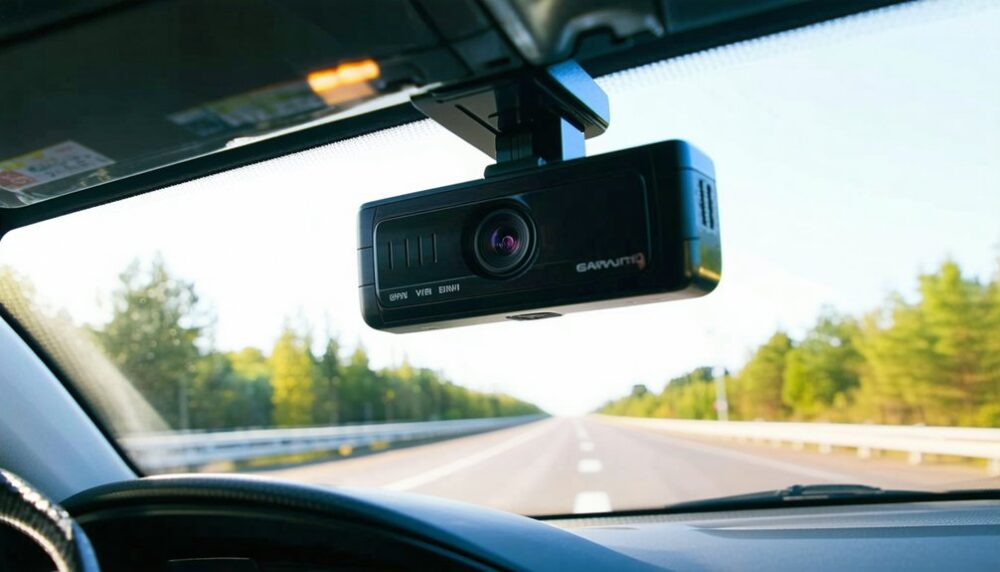
Smart dashcams enhance driver safety through real-time risk detection and AI-based behavior identification. They provide instant alerts, enabling corrective action to prevent accidents. Edge computing processes data in-vehicle for instant alerts and in-cab coaching. Advanced technologies and data analytics support targeted coaching programs, reducing collisions. Further exploration reveals the full potential of smart dashcams in revolutionizing road safety.
What Are Smart Dashcams And How Do They Work
Smart dashcams provide internet-connected features, such as smartphone apps and cloud access. They offer advanced features like privacy storage and firmware updates, ensuring secure data handling.
With built-in Wi‑Fi, Bluetooth, and sometimes 4G LTE, smart dashcams operate independently. Footage is stored on a removable microSD card, and loop recording is standard. Many smart dashcams also come with a supercapacitor for reliable operation in extreme temperatures, which is a key feature for drivers who frequently drive in harsh weather conditions.
Companion apps enable viewing footage, changing settings, and receiving notifications, making smart dashcams an essential tool for drivers seeking enhanced safety and connectivity features. They prioritize data security. Many smart dashcams also include crash detection features that automatically save and upload crucial footage in the event of an accident, providing valuable evidence and promoting driver safety. The use of community alerts through companion apps, such as the Cobra Drive Smarter app, delivers over 100 million shared alerts annually, enhancing driver awareness and safety.
Enhancing Driver Safety Through Real-Time Risk Detection
Smart dashcams are revolutionizing the way drivers approach safety on the road by incorporating real-time risk detection capabilities. They employ risk‑time analytics to identify potential hazards, such as hard braking and lane drifting. Driver‑behavior alerts are sent to drivers in real-time, allowing them to correct their behavior before a hazard becomes an incident. This proactive approach enables fleets to prevent accidents, reducing collision-related costs and liability exposure. The use of telematics can also help optimize routes and reduce fuel consumption, further enhancing the safety and efficiency of fleet operations. By utilizing AI technology, fleets can also reduce insurance premiums and settlement costs, which can average $375,000 per accident, by minimizing the occurrence of such incidents. The implementation of GPS tracking systems allows for live location and status monitoring, enabling managers to respond quickly to potential safety risks and improve overall fleet safety.
The Role Of Ai In Identifying And Correcting Risky Behaviors
Artificial intelligence is reshaping the terrain of driver safety by enabling dashcams to identify and correct risky behaviors in real-time. AI-driven behavior detection identifies actions such as speeding, distracted driving, and lane departure. It also detects driver fatigue and distraction, enabling immediate correction. The use of Continuous learning algorithms allows for improved detection accuracy over time, leading to enhanced safety features.
The implementation of edge computing allows for real-time processing of data inside the vehicle, which enables instant alerts and in-cab coaching, replacing post-event review with proactive prevention.
Real-time alerts and instant incident analysis facilitate prompt response to risky behavior. By analyzing road scenes and driver psychological states, AI-connected dash cams enhance recognition of unsafe behavior patterns, reducing the likelihood of collisions and promoting a safer driving environment. This technology supports a community that values belonging and prioritizes safety. The implementation of proactive safety measures can lead to a significant reduction in collision frequency, with some studies showing a decrease of up to 60% within the first year of deployment.
How Smart Dashcams Support Targeted Driver Coaching Programs
Driver safety is further enhanced when AI-driven dashcams are integrated with targeted driver coaching programs.
These programs employ data from dashcams to provide specific coaching topics, focusing on risky events like speeding or distraction.
By capturing clips around these events, coaches can offer customized guidance, respecting drivers’ data privacy.
This approach to gam coaching prioritizes data privacy, ensuring that feedback is constructive and respectful.
Coaches can then use video evidence to support their coaching, creating a more effective and trusting relationship with drivers.
The use of dashcams can lead to financial returns by reducing insurance costs and improving safety culture, which in turn enhances driver safety and accountability.
This targeted approach improves overall driver safety and accountability.
Effective coaching is key to sustaining behavioral change, and using coaching frameworks can help achieve this goal, leading to a significant reduction in accidents and improved driver performance.
The implementation of proactive coaching sessions, which review data immediately after an incident, can also contribute to the success of these programs.
Understanding The Impact Of Smart Dashcams On Collision Reduction
Advanced dashcams employ computer vision and onboard analytics to detect risky behaviors, enhancing risk perception and mitigating driver burnout. By providing real-time alerts, these systems enable drivers to self-correct, reducing collision frequencies.
Fleets using AI-powered dashcams have reported significant decreases in collision frequency, with some citing up to a 60% decrease. This reduction is linked to behavior intervention, highlighting the importance of proactive measures in enhancing driver safety and reducing collisions.
The implementation of dashcam technology has been shown to have a significant impact on fleet safety, with a notable reduction in accident-related costs, leading to substantial savings for companies that adopt this technology. The use of dashcams has become increasingly popular as a means of promoting road safety awareness and encouraging responsible driving habits among motorists.
The Importance Of Video Evidence In Incident Resolution
Evidence plays an essential role in incident resolution, particularly when it comes to determining fault and resolving disputes.
Video evidence from dashcams provides unbiased, timestamped footage, supporting claim settlement and fraud prevention.
It offers investigative support by capturing the sequence of events, road conditions, and vehicle positioning.
This footage helps reduce disputes and prevents false claims, enabling more efficient incident resolution.
By providing clear video evidence, dashcams facilitate a more accurate and efficient claim settlement process, while also aiding in fraud prevention and investigative support.
This enhances the overall incident resolution process.
The use of dashcams has become increasingly popular due to the benefits of having a dashcam which can strengthen a claim by showing the exact sequence of events.
Streamlining Compliance And Risk Management With Smart Dashcams
As organizations deploy smart dashcams across their fleets, they must traverse a complex terrain of compliance and risk management. Effective privacy compliance auditing is essential to guarantee adherence to regulations. Implementing resilient privacy safeguards, such as data minimization and retention controls, helps mitigate risks.
Organizations must conduct thorough audits to verify camera functionality and data quality, guaranteeing compliance with relevant laws and regulations.
Unlocking Fleet Efficiency And Broader Safety Benefits
Fleet operations stand to gain considerably from the integration of smart dashcams, which provide a comprehensive approach to enhancing efficiency and safety.
Smart dashcams enable fleet analytics, allowing managers to optimize routes and reduce fuel consumption. This leads to insurance optimization, as fleets can demonstrate proactive risk management.
With real-time video and GPS tracking, fleet managers can respond quickly to incidents, reducing claim cycle time and associated costs.
How Smart Dashcams Contribute To A Safety-First Culture
How do organizations promote a safety-first culture, and what role do smart dashcams play in this effort?
Smart dashcams contribute to a safety-first culture by nurturing transparency, accountability, and driver enablement. They provide an unbiased record of road events, encouraging adherence to safety protocols. This approach strengthens the culture culture, promoting a sense of belonging among drivers. By using footage as evidence for objective review, organizations can establish consistent expectations for safe conduct, driving a culture of safety and professionalism. Smart dashcams enable driver enablement, promoting a culture of shared responsibility and safety.
The Benefits Of Real-Time Monitoring For Proactive Safety Measures
Real-time monitoring capabilities are a key feature of smart dashcams, enabling organizations to take a proactive approach to safety measures. This allows for instant alerts to be sent to drivers and fleet managers when unsafe behavior is detected, facilitating corrective action.
Predictive analytics enables smart dashcams to analyze footage and detect risky behavior, providing actionable safety perspectives.
Using Driver Scoring Tools To Improve Performance And Reduce Accidents
What role do driver scoring tools play in enhancing driver performance and reducing accidents? Driver scoring tools provide objective performance measurement, utilizing AI-powered dash cams and telematics systems to record and grade behaviors. Scoring thresholds can be customized to define scored events, and driver incentives can be implemented to motivate safer habits.
The Future Of Driver Safety: Integrating Smart Dashcams With Telematics
The integration of smart dashcams with telematics systems represents a significant advancement in driver safety, building upon the foundation established by driver scoring tools.
This integration enables Edge analytics to analyze driving behavior in real-time, providing useful understandings for safety analysis and claims review.
By combining video and telematics data, fleets can identify patterns and prevent collisions, while also ensuring regulatory and privacy compliance.
The resulting data-driven approach supports predictive analytics, enhancing driver safety and fleet efficiency, and creating a more complete record for operational decision-making.
This collaboration improves safety outcomes and reduces accident costs.
Overcoming Common Challenges In Implementing Smart Dashcam Solutions
Implementing smart dashcam solutions presents several challenges that fleets must steer through to reap the benefits of enhanced driver safety. Addressing driver acceptance and privacy concerns is essential, as transparent policies and clear communication can reduce resistance. Involving drivers in the technology review process and offering driver incentives can also improve acceptance.
Additionally, fleets must consider privacy and implement measures to protect it, while also providing rewards to drivers for participating in safety programs, ultimately nurturing a sense of belonging and cooperation among drivers, which is indispensable for successful implementation. Transparency is key to overcoming these challenges.
Best Practices For Selecting And Deploying Smart Dashcams Effectively
Several key factors come into play when selecting and deploying smart dashcams effectively, as fleets seek to maximize the benefits of enhanced driver safety. They consider video resolution, wide-angle coverage, and night performance.
A well-defined privacy policy and analytics are essential for effective deployment. Regular firmware updates guarantee the dashcam remains functional and secure.
Measuring The Return On Investment Of Smart Dashcam Technology
Fleets are realizing substantial financial benefits from smart dashcam technology, with many experiencing significant returns on investment. Insurance savings and claims reduction are key factors in this ROI. By considering budget cost and warranty terms, fleets can optimize their investment.
With 96% of agencies reporting cost reductions, smart dashcams are a precious asset. They free up budget capacity, reducing costs and enhancing overall efficiency.
Frequently Asked Questions
Are Smart Dashcams Compatible With All Vehicles?
They are not universally compatible, as vehicle compatibility and wiring basics vary, often requiring specific configurations or aftermarket installations to guarantee seamless integration and peak functionality.
Can Dashcam Footage Be Used in Court?
Yes, dashcam footage can be used as court evidence, but it must address privacy concerns and adhere to specific admissibility standards to be considered valid and reliable evidence.
Do Smart Dashcams Require Internet Connection?
Smart dashcams do not require internet connection for basic recording, prioritizing privacy and local data storage, allowing offline operation and preserving user autonomy.
How Much Do Smart Dashcams Cost?
Smart dashcams’ pricing range varies, with entry-level models starting at $50, and warranty coverage often included, impacting overall cost and value for consumers seeking reliable driver safety solutions.
Are Smart Dashcams Easy to Install?
They are generally easy to install, following an installation guide, with various mounting options, power sources, and user-friendly interfaces, making setup straightforward for most users, with some models offering firmware updates.
References
- https://www.lytx.com/blog/4-ways-ai-dash-cams-can-help-improve-fleet-safety
- https://ecotrackfleetmanagement.com/blog/how-ai-dash-cams-help-prevent-collisions-and-improve-driver-coaching/
- https://www.teletracnavman.com/product-resources/smart-dual-dashcam
- https://www.gpsinsight.com/blog/smart-cameras-the-key-tool-leading-the-fleet-safety-revolution/
- https://gomotive.com/blog/smart-dashcam-guide/
- https://www.pelsee.com/blogs/blog/why-a-dash-cam-is-your-best-investment-for-driving-safety
- https://www.geotab.com/blog/ai-dash-cam-for-fleets-safety-distracted-driving/
- https://www.instagram.com/reel/DTQdTmmjzo8/
- https://www.verizonconnect.com/solutions/fleet-dash-cam/
- https://www.skeyewatch.com/ai-fleet-dash-cam-driver-monitoring-system/