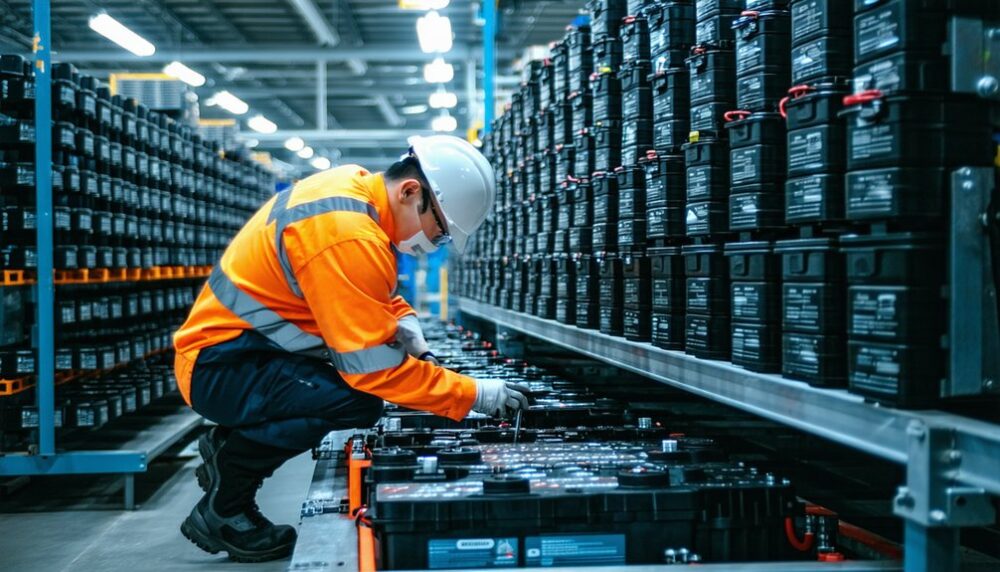
EV battery recycling is transforming the auto industry by reducing waste and mitigating supply chain risks. It promotes a circular economy, reclaims valuable materials, and creates new jobs. As the industry expands, it is positioned to greatly impact the auto sector. The future of EV battery recycling holds much promise, and exploring its developments reveals a more sustainable future for the industry.
What Is Ev Battery Recycling
EV battery recycling encompasses the process of collecting, dismantling, and reprocessing used electric-vehicle battery packs to recover materials for reuse in new batteries or other products. This process supports circular‑economy integration by reducing waste and promoting sustainable practices.
Some batteries are reused in second‑life applications, such as stationary storage, before being recycled.
The recycling process involves mechanical treatment, metallurgical processing, and other technologies to recover precious materials. The use of hydrometallurgical routes can achieve high recovery rates of up to 99% for certain materials, making it a crucial part of the recycling process.
The development of lithium‑ion batteries has played a significant role in the growth of the electric vehicle industry, and their recycling is becoming increasingly important for sustainable development.
Effective recycling of EV batteries can help salvage nickel and other valuable metals, which can then be used to offset the environmental impacts of mining, especially when recovery rates exceed a certain threshold.
Why Ev Battery Recycling Matters
Several key factors highlight the importance of electric vehicle battery recycling, highlighting its potential to reshape the automotive industry.
EV battery recycling supports a circular economy by recovering essential materials and reducing waste. This approach also helps mitigate price volatility and supply disruptions.
Additionally, recycling provides consumer incentives by promoting sustainable practices and reducing the environmental footprint of EVs.
By adopting closed-loop recycling, the industry can conserve critical minerals and essential materials, ultimately contributing to a more sustainable and responsible automotive sector.
The recycling process also enables the recovery of valuable metals, such as lithium, which can be reused in new battery production, further reducing the industry’s reliance on virgin materials.
The use of toxic materials in EV batteries makes recycling crucial to prevent environmental damage and promote a more sustainable future.
This shift towards recycling is indispensable for the industry’s growth and environmental stewardship. The recycling of lithium-ion batteries is made possible by the fact that recyclable metals can be refined into new battery materials without compromising life, thanks to the process of urban mining of old batteries.
How Ev Battery Recycling Works
As the automotive industry continues to shift towards sustainable practices, understanding the complexities of electric vehicle battery recycling has become increasingly important.
The process involves collection, sorting, and safety handling, with batteries collected from various sources and transferred through supply chain logistics. Consumer perception trends emphasize the need for responsible recycling.
Batteries are dismantled, shredded, and pre-processed to separate components, with mechanical recycling and hydrometallurgical extraction used to recover metals. This multi-step process requires careful planning and execution to guarantee efficient and safe recycling, ultimately supporting the industry’s sustainable goals. Effective logistics are essential. The recycling of EV batteries also helps to reduce the demand for mining of raw materials, which in turn lowers the environmental impact of the automotive industry.
The use of pyrometallurgy techniques is also being explored to improve the efficiency of the recycling process, allowing for the recovery of valuable materials such as cobalt and nickel.
The recycling industry is expected to grow significantly over the next decade, driven by the increasing number of end-of-life batteries and the need for circular economy approaches to reduce waste and promote sustainability.
Benefits Of Ev Battery Recycling
Numerous benefits arise from recycling electric vehicle batteries, with significant advantages in resource conservation, environmental sustainability, and economic value.
This supports a circular economy, where materials are continuously cycled back into production, reducing waste and the demand for primary materials.
Recycling also promotes job creation, as a new industry emerges to handle the collection, processing, and reuse of battery materials.
By adopting EV battery recycling, the auto industry can reduce its environmental footprint, while also creating new economic opportunities and contributing to a more sustainable future.
This approach cultivates a sense of community and belonging among industry stakeholders.
The recycling process can reclaim over 95 % of battery components, such as nickel, cobalt, and lithium, which can then be used to produce new batteries, reducing the need for primary materials and minimizing waste.
The implementation of full recycling can lead to significant economic savings and a reduction in greenhouse gas emissions, making it a crucial step in the development of a sustainable auto industry.
Current State Of Ev Battery Recycling
Approximately 105,150 tons per year of recycling capacity existed in the U.S.
The current state of EV battery recycling is driven by industrial scrap recovery, with most batteries still in use.
Supply chain logistics are being developed to support the growing industry.
Circular economy incentives are also being implemented to encourage sustainable practices.
As the industry expands, it is expected to play a pivotal role in reshaping the auto industry.
With a focus on efficient recycling processes, companies are working to improve recovery rates and reduce waste, ultimately contributing to a more sustainable future for the industry.
The development of recycling facilities is influenced by the Inflation Reduction Act, which aims to increase the use of recycled materials in new batteries.
The recycling process is made more efficient by the fact that materials are infinitely recyclable, which can help to lower battery production costs over time.
The U.S. government is supporting the growth of the industry by providing funding for research and development of critical materials, which is essential for the production of EV batteries.
Market Growth And Industry Scale
Market growth in the EV battery recycling industry is accelerating rapidly, with forecasts indicating a significant expansion in the coming years.
The global market value is estimated to reach $23.72 billion by 2035, with a 40.9% CAGR.
Market forecasting suggests a substantial increase in demand, driven by the expanding EV fleet and end-of-life battery volumes.
As the industry scales, companies are focusing on optimizing their supply chain to improve efficiency and reduce costs.
Strategic partnerships and investments in recycling infrastructure are also driving growth, with a focus on creating a more structured and sustainable supply chain.
The regulatory landscape is also playing a crucial role in shaping the industry, with the EU regulations mandating recycling of critical materials and promoting a circular economy, which is expected to further fuel the market growth.
Core Materials Recovery And Resource Security
How effectively can the auto industry recover core materials from end-of-life electric vehicle batteries, and what implications does this have for resource security?
The recovery of core materials like lithium, cobalt, and nickel is vital for supply chain resilience.
By recycling these materials, the industry can reduce its dependence on virgin mined materials and mitigate metal price volatility.
This approach enhances supply chain resilience, reducing exposure to geopolitical risks and price fluctuations.
Effective core materials recovery is essential for the auto industry’s long-term sustainability, enabling it to secure critical resources and maintain a stable supply chain.
Regulatory Pressure And Policy Support
Regulatory frameworks are increasingly playing a crucial role in shaping the electric vehicle battery recycling arena, with governments worldwide implementing policies to support the development of domestic recycling capacities.
Policy incentives, such as tax credits and grants, encourage investment in recycling infrastructure.
Producer responsibility is also being expanded, with states like New Jersey enacting extended producer responsibility laws.
These regulations aim to promote a circular economy, reducing waste and increasing the use of recycled materials in new batteries.
Technology And Process Innovation
As electric vehicle battery recycling continues to evolve, innovations in technology and process are playing a vital part in reshaping the industry.
Direct recycling and process optimization are key areas of focus, enabling the preservation of more original cathode structure and reducing material breakdown.
This approach allows for selective recovery, improving material yield and reducing refining load.
Process optimization is shifting towards selective recovery, increasing efficiency and reducing waste.
Auto Industry Restructuring And Business Models
Numerous automakers are embracing vertical integration and closed-loop supply chains, bringing battery manufacturing and recycling closer together to enhance control over materials and costs.
This approach cultivates supply chain resilience by reducing dependence on external intermediaries.
As the industry shifts towards circular financing models, companies can reap benefits from recovered materials.
By adopting closed-loop systems, automakers can guarantee a steady supply of recycled materials, promoting a more sustainable and economically viable business model.
This reconfiguration enables the auto industry to thrive while minimizing environmental impact, ultimately contributing to a more circular and resilient economy.
Regional Dynamics And Future Supply Impacts
Most notably, regional dynamics are playing a significant role in shaping the future of EV battery recycling, with distinct trends emerging in North America, Europe, Asia-Pacific, and the Middle East and North Africa.
Regional policy is driving growth, with the EU Battery Regulation and Asian battery policy advancing recycling efforts.
Supply chain resilience is essential, as transport costs and feedstock leakage impact domestic recovery volumes.
As the industry expands, regional dynamics will continue to influence the development of EV battery recycling, with each region presenting unique opportunities and challenges for growth and investment in this emerging market.
The Role Of Recycling In Reducing Raw Material Demand
Regional dynamics play a significant role in shaping the future of EV battery recycling, but the impact of recycling on raw material demand is a distinct aspect of the industry’s growth.
Recycling reduces dependence on primary mining, recovering lithium, cobalt, and nickel from end-of-life packs. This approach supports a circular economy, enhancing supply resilience by creating domestic secondary materials.
Challenges And Opportunities In Ev Battery Recycling
Emerging as a pivotal component of the electric vehicle (EV) industry, EV battery recycling faces significant challenges that must be addressed to unleash its full potential. The economic viability and technical complexity of recycling are major hurdles.
Ensuring workforce safety is crucial, as spent batteries pose fire and explosion hazards. A circular economy approach can help mitigate these risks. By prioritizing safe handling and recycling practices, the industry can reduce environmental risks and promote a more sustainable future.
Effective recycling systems can support workforce safety while contributing to a circular economy.
Best Practices For Implementing Ev Battery Recycling
Implementing effective EV battery recycling practices is essential to mitigating the industry’s environmental footprint. Best practices include clear collection and ownership rules, traceability, and safe handling.
A well-organized supply chain is essential for efficient recycling, adhering to economy standards that prioritize sustainability. This involves assigning responsibility, tracking battery identity, and using battery passport-style systems for transparency.
The Future Of Ev Battery Recycling And Its Impact On The Auto Industry
How will the auto industry evolve as electric vehicle battery recycling continues to gain momentum? The industry is expected to alter considerably, with a projected market growth from $2.1 billion to $19.3 billion by 2030.
As recycling expands, companies must address consumer logistics and liability risks. Effective recycling systems will mitigate these risks, ensuring a seamless experience for consumers.
Frequently Asked Questions
What Happens to Recycled Battery Materials?
Recycled battery materials undergo material recovery, meeting market demand for valuable metals, and are reused in new products, reducing waste and supporting a sustainable automotive industry ecosystem.
Can All EV Batteries Be Recycled?
No, not all EV batteries can be recycled due to varying battery lifespan and complex recycling logistics, making the process challenging and limiting widespread adoption.
How Much Does EV Battery Recycling Cost?
They estimate EV battery recycling costs at $1 to $15 per kilogram, with a cost breakdown influenced by market incentives, affecting the overall recycling process efficiency and profitability.
Is EV Battery Recycling Profitable Yet?
EV battery recycling is profitable in some cases, driven by strong s chain economics and supportive recycling policy structures, although uniform profitability remains elusive due to variable costs and material values.
Who Regulates EV Battery Recycling Standards?
Regulatory agencies establish EV battery recycling standards through policy structures, guiding the industry towards sustainable practices and responsible waste management, with federal, state, and international entities playing key roles together.
References
- https://americanbatterytechnology.com/ev-battery-recycling-gains-momentum/
- https://www.precedenceresearch.com/electric-vehicle-battery-recycling-market
- https://www.azocleantech.com/article.aspx?ArticleID=2108
- https://www.fortunebusinessinsights.com/electric-vehicle-battery-recycling-market-105928
- https://www.imarcgroup.com/electric-vehicle-battery-recycling-market
- https://theicct.org/wp-content/uploads/2023/02/recycling-electric-vehicle-batteries-feb-23.pdf
- https://www.iea.org/reports/ev-battery-supply-chain-sustainability
- https://www.marketsandmarkets.com/Market-Reports/automotive-battery-recycling-market-201722289.html
- https://www.technavio.com/report/electric-vehicle-battery-recycling-market-analysis
- https://www.sciencedirect.com/science/article/pii/S2214629620301572